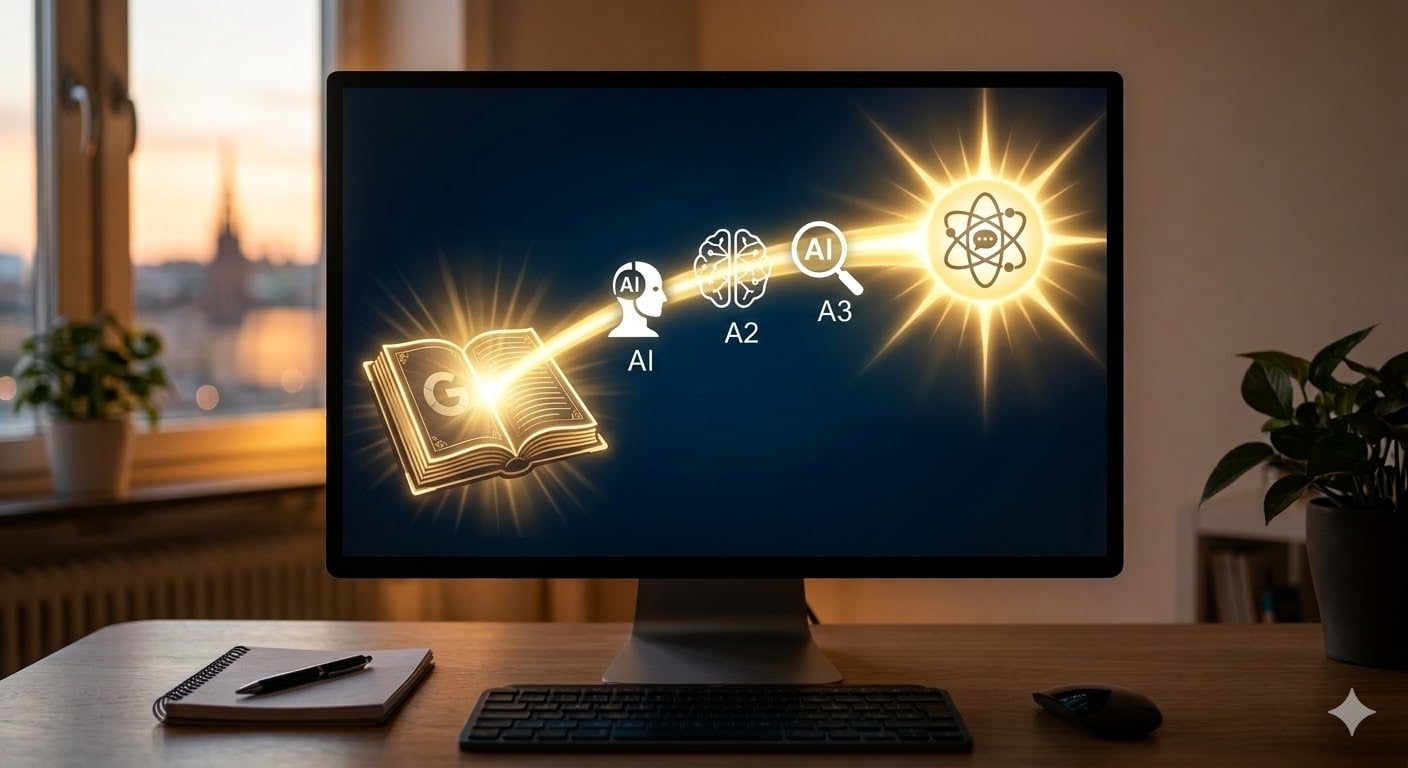
The world of digital marketing is changing as AI shifts from being a useful tool to an essential part of strategy planning.
AI systems have the ability to analyze vast amounts of data to understand how users behave. This capability, even when applied on a large scale, enables marketers to create content, develop product ideas, and design ads that feel personalized for each individual.
AI increases efficiency by automating digital marketing tasks and managing programmatic advertising such as buying and placing ads to maximize effectiveness. It also assists with content creation, such as generating engaging email subject lines or blog post ideas, allowing human creativity to focus on more strategic responsibilities.
Furthermore, AI algorithms provide predictive analytics, helping marketers stay ahead by forecasting trends and customer behavior rather than simply reacting.
With AI support, we are shifting from large, manual tasks to highly detailed, automated, and personalized experiences for each customer.
Due to the significant role of AI, a key question arises: Is the role of human digital marketers diminishing?
In this article, we will explore the roles of AI and human marketers in digital marketing, and address the key question: will human marketers still be needed in the future?
What AI Does Best in Digital Marketing
Fast, Large-Scale Data Insights
Unlike a human marketer who can view only one spreadsheet or dashboard at a time, AI can analyze millions of data points from many different sources simultaneously. These sources include website visitor actions, ad clicks, social media interactions, and purchase history.
Hyper-Personalization
A human marketer can write a personalized email for a top client, but AI can create a unique experience for each user in real time.
AI can generate personalized product suggestions, website content, email subject lines, and ad copy for millions of people simultaneously. This ensures that every interaction feels tailored to the individual.
A human team could never achieve one-to-one marketing on such a large scale manually.
Continuous Campaign Refinement
AI’s ability to test and optimize in real time across multiple variables is impressive. This system can conduct hundreds of A/B tests simultaneously on factors such as email send times, ad creatives, and landing pages.
AI can make small adjustments instantly, unlike a human who reviews outcomes periodically. This ensures that paid efforts are as efficient and profitable as possible, without guesswork or emotional bias.
Smart Predictions for Better Planning
Artificial intelligence is not just about reflecting on the past; it is also about looking ahead. By analyzing historical and current data, AI models can forecast sales trends, assess the risk of customer churn, and identify which leads are most likely to convert into sales.
This allows marketers to be proactive rather than reactive, enabling them to focus on the opportunities that offer the most value.
The Human Advantage
Big-Picture Thinking
AI works best when it focuses on specific metrics, but humans ultimately determine the “why.” They connect campaigns to broader corporate goals, monitor the competition, and make quick decisions to adjust strategy as circumstances change. AI cannot do this because it only analyzes past data.
Telling Stories That Stick
AI generates content by analyzing existing patterns, while humans create new ideas. Humans can write engaging brand stories, incorporate humor and cultural context, and transform a company into a beloved brand by making it emotionally resonant. An AI system cannot achieve this level of uniqueness.
Understanding and Building Bonds
Humans create genuine trust and community. We can read a room or a comment section and respond with real feelings. AI can copy the behavior, but it can’t truly create loyalty or understand complex cultures.
Responsible Decision-Making
Humans are the primary moral guides and they have to ensure that campaigns are not deceptive, do not reinforce negative biases, and align with the brand’s core values. This requires making difficult decisions about what is right, not just what is useful.
Final Thoughts
At the end of the day, it’s not about setting “Humans against machines” but rather about collaboration. AI brings speed, scalability, automation, and data intelligence to the table, while digital marketers offer creativity, empathy, strategy, and practical insights. Each has its unique strengths and weaknesses when operating solo, but together, they create an unstoppable force.
Those who combine human ingenuity with AI’s speed and accuracy will shape the future of digital marketing, not those who see it as a threat. The real winners are not just the intelligent AI algorithms or the marketers alone, but the marketers who know how to use AI to their advantage.