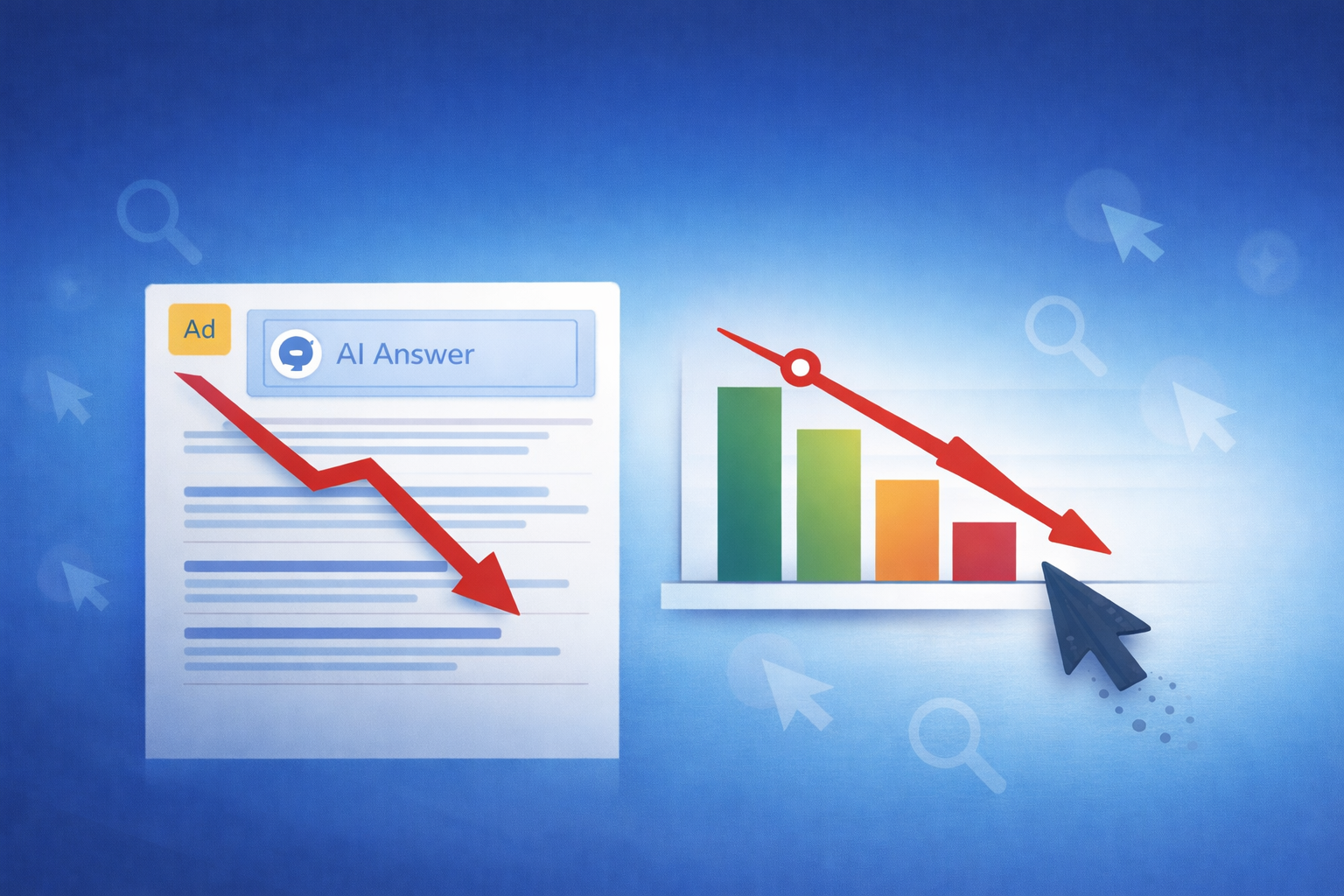
By 2026, even if you rank at the top, your website traffic could still drop significantly. This is not a mistake – it is becoming a new normal as AI-powered searches answer more questions directly, reducing the need for users to visit websites.
With Google’s AI Overviews (AIO) and "zero-click" features appearing in nearly half of all searches, the typical path from search result to website is undergoing significant change. What does this mean for your site, and how can you adapt before your analytics decline?
Understanding the Click Gap Through Data
The data for 2026 is eye-opening. For informational queries where an AI Overview is present, organic click-through rates (CTR) have plummeted by as much as 60-80%.
- The Zero-Click Standard: Roughly 60% to 65% of all searches now end without a single click to an external website. Users are getting their answers, checking the facts, and leaving—all within the search interface.
- The “Mobile Fold” Problem: On smartphones, AI summaries and ads take up so much space at the top of the screen that users often have to scroll several times before they see the first normal (organic) search result.
- The Citation Advantage: There is some good news. Brands that are directly mentioned as sources inside AI summaries get about 35% more clicks than brands that are simply listed below the AI box.
Why Success Metrics Are Changing
If you measure success only by sessions or clicks, you are focusing on a smaller and shrinking portion of overall visibility.In this environment, you need to track Search Presence rather than just Site Traffic.
| Old Metric | Why It’s Declining | New Metric | Why It Matters |
| Keyword Ranking | Ranking #1 doesn't guarantee a click anymore. | Brand Citation Share | How often AI models name you as the authority. |
| Total Sessions | Many users get value without visiting. | Engagement Rate | The quality of the people who do click through. |
| Bounce Rate | Less relevant for quick informational visits. | Conversion Velocity | How quickly a visitor moves toward a lead or sale. |
How to Adapt: Your 2026 Strategy
You don't need to give up on SEO; you just need to change your "AEO"—Answer Engine Optimization.
1. Use an Answer-First Approach
AI systems look for clear and easy-to-find facts. If your answer is buried deep inside a long article, chances are the AI will not pick it up.
Add a short summary at the top of important pages. A quick 50-word overview helps both users and search engines understand your main point right away.
Use structured data and schema markup to clearly signal what your content is about. This helps search engines identify your page as the direct answer to a specific question.
2. Focus on Information Value
Google now prefers content that offers real value and information that cannot be easily summarized by AI.
The key rule is simple: if your article only repeats what the top search results already say, it adds no new value. To rank better today, you need original insights, real case studies, unique data, or expert opinions that make your content different from others.
3. Diversify into "Search Everywhere"
People are no longer using Google for everything. Many younger users search directly on platforms like TikTok or YouTube, while professionals often use tools like Perplexity or ChatGPT to find information.
Video content is now essential. Video results get much higher click-through rates than text-only results, so including video improves visibility and engagement.
Social media search is growing. Treat your social captions like short blog posts and optimize them with clear information and relevant keywords.
4. Focus on Transactional Searches
Informational traffic is being "absorbed" by AI. However, transactional searches (where someone actually needs to buy something or sign up for a service) still drive clicks. Shift your focus toward high-intent content that requires a user to interact with your specific tools or products.
The Bottom Line
We are moving from an era of "getting clicks" to an era of "building authority." If your brand is the one the AI constantly cites as the expert, you will win in the long run—even if your raw traffic numbers look different than they did five years ago.
-
Bern Perez is a Consultant at PragoMedia, who loves to write about emerging SEO trends, innovative marketing strategies, and the evolving landscape of technology.
Related Posts
What is Search Intent? Simple Ways to Incorporate it Into Your Marketing Strategy
Satisfying user intent must be the primary goal for anyone creating relevant and engaging content…
What Are Core Web Vitals, and Why Do They Matter for Small Business SEO?
Core Web Vitals are designed to provide a better web experience by encouraging website owners…
Why Is Google Cloud Gaming a Game Changer?
Google is continuing its push into cloud gaming by launching a new feature that allows…
Google Not Happy with Canada’s Proposed “Link Tax”
A link tax is a proposed rule that would require Google and other tech companies…