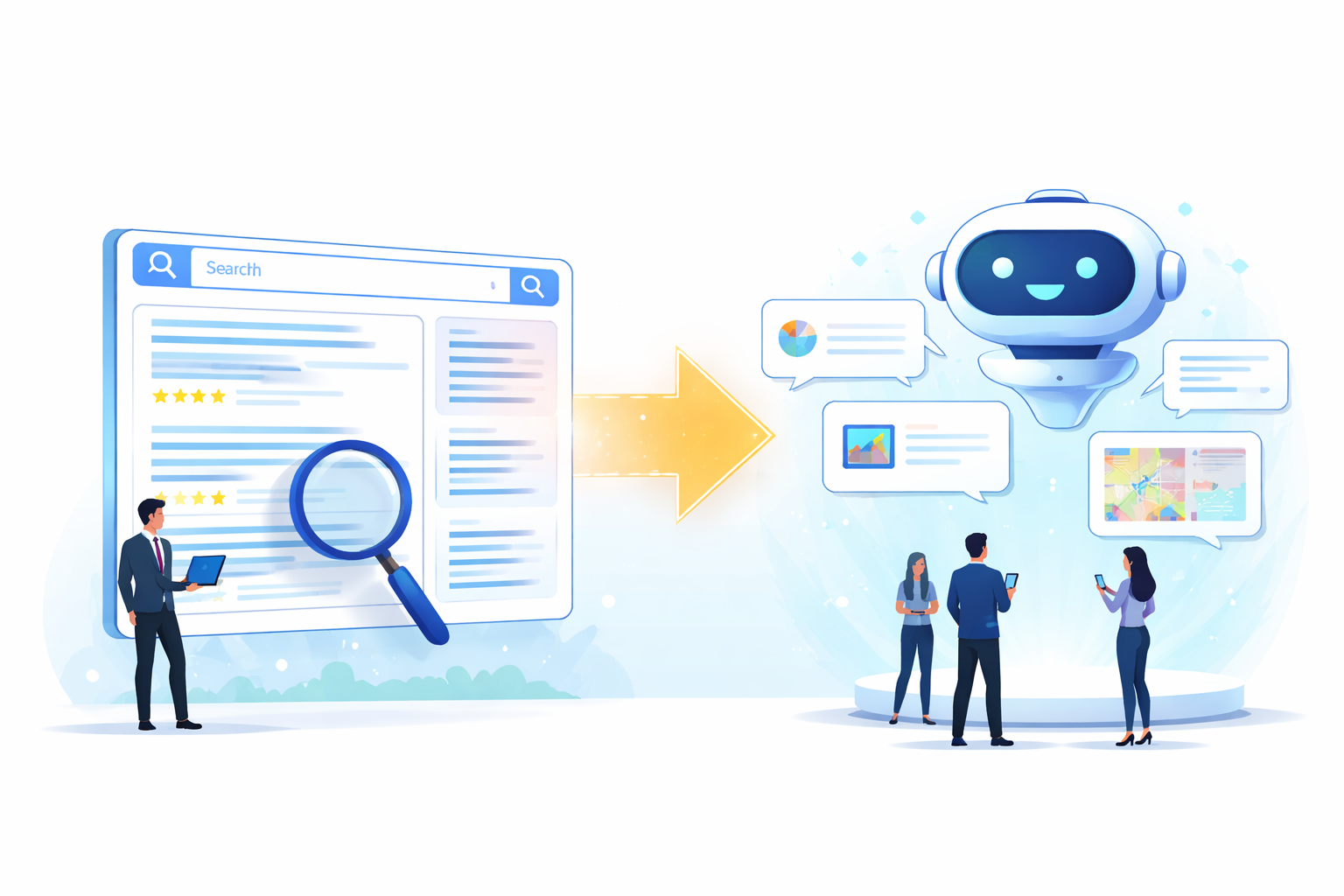
Let’s be honest: the old SEO playbook is starting to feel a bit dusty. For a couple of decades, the game was simple: select the right keywords, optimize content, hunt down backlinks, and then measure success by clicks, rankings, and organic traffic.
But look at how we actually use the internet now. Instead of digging through ten different blue links, we’re asking ChatGPT for a recipe or letting Google’s AI Overviews summarize a complex topic in few bullet points. We aren’t just “searching” anymore; we’re looking for answers. And often, those answers don’t require us to ever leave the search page.
The New Reality of “Discovery”
This change is definitely a double-edged sword. If an AI can provide users with exactly what they need using your data, but without them ever clicking through to your site, can we still consider that a win?
In this new era of AI visibility, the answer is a resounding “Yes”. We need to stop fixating on raw traffic and start focusing on brand authority instead. If a language model (LLM) regularly references your brand as the go-to expert, you have essentially earned the best kind of word-of-mouth endorsement. You are not just a link; you are the backbone of the AI’s knowledge.
How Brands Can Adapt
Here are some practical ways to stay visible in AI answers:
1. Generative Engine Optimization (GEO)
Generative Engine Optimization (GEO) is about structuring your content so AI systems can understand and reference it. Clear headings, factual information, and concise answers make your brand more “AI-friendly.”
2: Target the “Source of Trust”
Traditional link building is becoming LLM Link Building. It’s less about the sheer volume of links and more about being mentioned in the places the AI actually trusts—think niche forums, high-level research papers, or heavy-hitter publications like Reddit or Wikipedia.
3: Track Your Citations
You wouldn’t run an ad campaign without checking the ROI, right? You need to keep an eye on how often AI models are actually name-dropping you. If they aren’t, your content might be too vague or buried too deep. High-quality mentions across authoritative sites increase your chance of being referenced.
4: The “Expert” Factor
AI is great at summarizing, but it’s bad at original thought. Lean into your unique expertise. Use original data, case studies, and “I was there” perspectives. That’s the kind of high-value info that AI has to cite because it can’t invent it.
The Road Ahead
The way we find things online is changing fast. We’re moving away from clicking through a list of links and toward getting instant answers from AI. This means the old goal of just getting “clicks” is being replaced by a new one: making sure AI knows who you are and trusts what you say.
To stay relevant, you have to make your info easy for AI to find and use. This isn’t about “tricking” a search engine anymore; it’s about being so helpful and factual that the AI chooses to name-drop your brand as the expert. If the AI doesn’t cite you, you basically don’t exist to the user.
In the end, the brands that win won’t be the ones using old SEO shortcuts. They’ll be the ones that focus on being a real authority. As AI starts doing more of the work for us, being the “source of truth” is the only way to make sure you don’t disappear in a world without clicks.