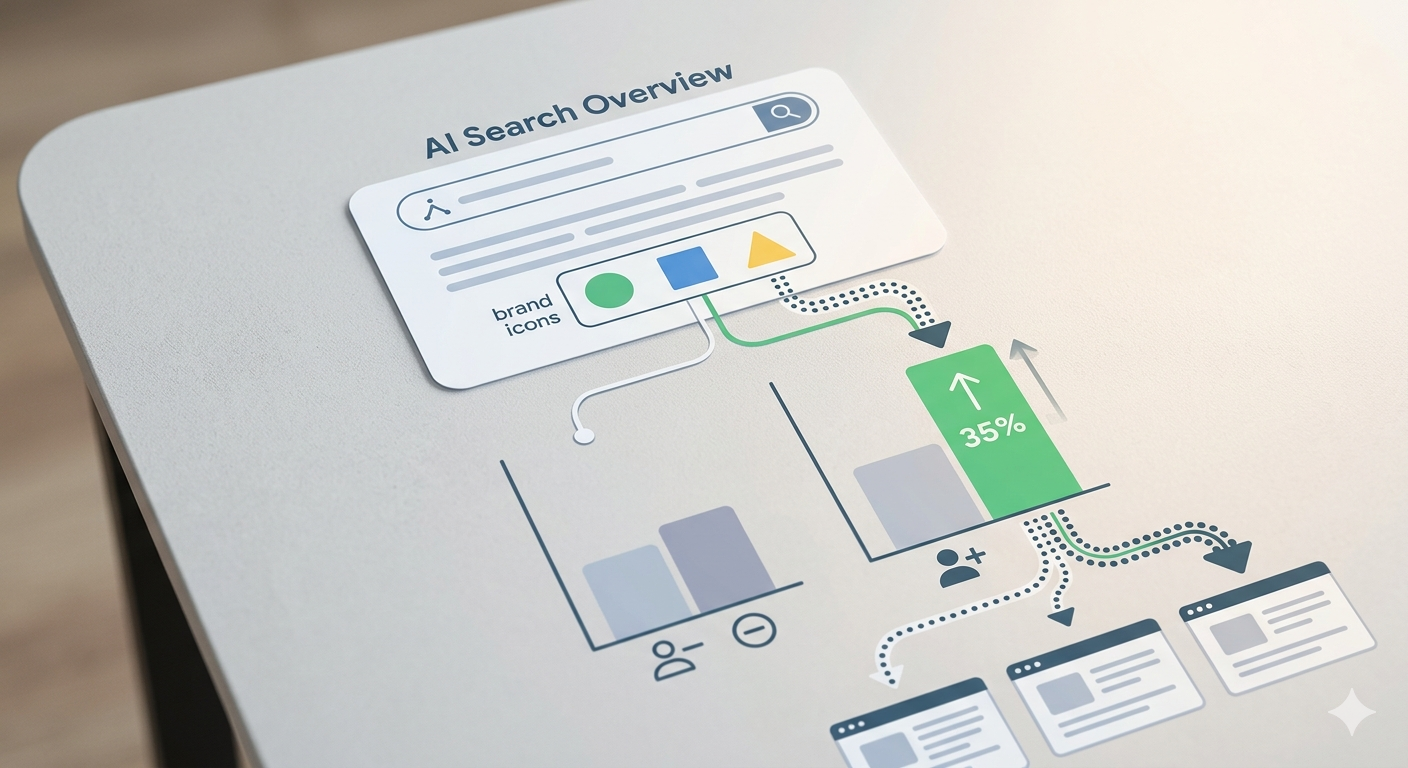
Let’s face it: the way people find businesses online is shifting fast. Instead of endlessly scrolling through pages of Google search results, consumers are increasingly turning to AI assistants like ChatGPT, Gemini, Claude, and Perplexity for instant answers.
Questions such as “What is the best accounting software for freelancers?” or “Which digital marketing agency should I hire?” are becoming the new norm. Instead of a list of links, AI now provides direct, curated recommendations.
For small businesses, this is not a threat – it is a significant opportunity. While traditional SEO still matters, getting noticed by AI requires a broader strategy. It is less about manipulating algorithms with keywords and more about building genuine authority, trust, and a unique digital presence.
Here are ten highly effective ways to get your business onto AI’s radar.
1. Build a Clear and Informative Website
Your website is your ultimate digital storefront. If an AI crawls your site and encounters vague corporate language or confusing jargon, it will not know how to interpret your business.
Be clear about who you are, what you offer, whom you serve, and why you do it better than anyone else. Avoid overused marketing buzzwords and focus on specific details about your products, services, and expertise. The easier your site is to understand, the more confidently an AI can recommend it to users.
2. Publish Content People Actually Want to Read
AI models thrive on content, but they are becoming more selective. They rely on genuinely helpful information to generate answers. Businesses that consistently publish valuable resources naturally establish themselves as trusted authorities.
Do not write just for the sake of it. Create blog posts, step-by-step guides, case studies, and in-depth FAQs that address the specific questions your customers ask. When your content solves real problems, AI tools are much more likely to reference and cite you as a source.
3. Stop Dumping All Your Services on One Page
A very common mistake small businesses make is creating a single, generic “Services” page and listing everything they do from A to Z. That is a nightmare for an AI trying to parse your specific expertise.
Instead, give every service or product its own dedicated page. For example, a marketing agency shouldn’t just list “Marketing.” They should have distinct pages for SEO, PPC advertising, and web design. This clarity helps AI match your exact offerings to highly specific user queries.
4. Get People Talking About You (Digital PR)
Third-party validation is extremely valuable. AI systems are naturally skeptical and tend to trust businesses endorsed by reputable, independent websites, news outlets, and industry blogs.
Seek opportunities to increase your visibility. You can contribute guest articles to industry sites, participate in expert roundups, or share original research. Even a few mentions on respected platforms can significantly boost your online authority in the eyes of an AI.
5. Collect and Maintain Positive Reviews
Customer reviews aren’t just for human social proof anymore; AI tools actively scan review platforms to judge whether your business is legitimate and reliable.
Encourage your happy clients to leave feedback on the platforms that matter most to your industry, whether that’s Google Business Profile, Trustpilot, Yelp, or software-specific sites like G2.
6. Optimize Your Google Business Profile
If you operate a local business, this step is entirely non-negotiable. Google’s own AI models rely heavily on Google Business Profile data to answer location-based questions.
Make sure your profile is 100% complete and accurate, including your exact business name, address, phone number, website, category, and operating hours. Keep it active by uploading fresh photos, posting updates, and replying to reviews.
7. Keep Your Business Details Consistent Everywhere
AI connects the dots across the entire internet to verify your identity. If your phone number is different on Facebook than it is on your website, or if your business name varies slightly across different online directories, it creates a red flag.
Mixed signals create doubt. Make sure your NAP (Name, Address, Phone number) details are identical everywhere online, from your local chamber of commerce listing to your Instagram bio.
8. Own a Specific Niche
It is incredibly tough to stand out as a generalist. On the flip side, businesses that plant their flag in a specific niche are much easier for AI to identify and recommend.
Instead of trying to be everything to everyone, focus on becoming the go-to expert for a specific industry or customer segment. For instance, a web design agency specializing solely in healthcare websites or a consultant focused strictly on e-commerce startups will instantly pop up when an AI searches for those exact specialties.
9. Focus on High-Quality Backlinks
Yes, traditional links still matter immensely in the era of AI search. When a respected website links back to your content, it acts as a digital vote of confidence.
However, prioritize quality over pure numbers. One solid link from a well-known, authoritative industry publication is worth more than a hundred low-quality directory links. Build genuine relationships, create shareable content, and let your link profile grow naturally.
10. Audit How AI Tools Talk About You
Treating AI optimization as a “set-it-and-forget-it” task is a missed opportunity. Take some time to actually quiz ChatGPT, Gemini, and Claude about your industry and see who they recommend.
Ask questions like, “What are the best boutique gyms in [Your City]?” or “Who is a reliable IT consultant for small law firms?” If your competitors keep popping up instead of you, reverse-engineer what they’re doing. Are they getting more press? Is their content more thorough? Use those insights to refine your own approach.
The Bottom Line
AI search is not a passing fad; it is rapidly becoming the foundation of online discovery. To succeed in this environment, small businesses must move beyond outdated SEO tactics and focus on building a strong digital reputation.
At the end of the day, AI recommendations are just a mathematical reflection of content quality, consistent branding, third-party press, and genuine customer love. Give the models the trust signals they crave, and your business will naturally be the one they pitch to future customers.